


Delaware cannabis legalization is now fully operational. On August 1, 2025, Delaware made history as legal adult-use cannabis sales officially began across the First State, with adults aged 21 and over able to legally purchase recreational marijuana from licensed cannabis retailers for the first time. The road to that moment was neither straight nor easy. It wound through a landmark Senate vote, a governor’s veto, a legislative reset, and ultimately a quiet but decisive act of political resolve. This is the full story of Delaware cannabis legalization — from the 2022 Senate chamber to a thriving legal market. For broader context on cannabis legalization nationwide, see our
.Delaware Cannabis Legalization Begins: The 2022 Senate Vote
The Bill and the Vote
The Delaware Senate approved a bill to legalize possession of small amounts of cannabis on May 12, 2022. The chamber passed the measure 13–7, one week after the House of Representatives approved it on May 5. The bill removed criminal penalties for possession of less than one ounce of cannabis by adults 21 and older. It also permitted transfers of less than one ounce between adults.
Delaware had decriminalized low-level cannabis possession in 2015. However, civil penalties of up to $100 still applied for possessing up to one ounce. The 2022 bill eliminated those penalties entirely for adults. Public consumption and possession above one ounce remained illegal under the measure.
The Case for Delaware Cannabis Reform
State Sen. Laura Sturgeon, a supporter of the bill, made the case plainly on the Senate floor. “Prohibition hasn’t worked and doesn’t work,” she
. “And if there is a gateway drug, it’s alcohol, and nobody will pitch prohibiting that because prohibition did not work.”
Regulated Sales: A Separate Battle
Delaware cannabis legalization advocates deliberately separated the question of possession from the question of regulated commercial sales. An earlier comprehensive measure had failed to pass. Consequently, lawmakers split the two issues into companion bills to improve each one’s chances of passage.
Sen. Trey Paradee, the sponsor of both bills, said directly that he shared concerns about legalizing possession without simultaneously establishing a regulatory framework for sales. “If we pass this bill and not the other one, I will personally ask the governor to veto this bill,” Paradee told colleagues.
Republican Sen. Colin Bonini also opposed passing possession reform without regulation. “The reality is that we might as well call this the ‘encourage illegal behavior act,'” Bonini said. “Because where are you going to get it? You’re going to a drug dealer!” Bonini added, however, that he supports Delaware cannabis legalization in general — he simply believed reform must include what he called “a safe regulatory environment.”
Governor Carney’s Opposition — and His Eventual Decision
A Governor Against Cannabis Legalization
Then-Governor John Carney had long and vocally opposed Delaware cannabis legalization. He made his position clear in a 2021 interview with Delaware Public Media. “Look, I just don’t think it’s a good idea,” Carney
. He added that he did not view a legal cannabis market as a positive development for community or economic strength in the states where it had already launched.Sen. Kyle Evans Gay acknowledged the difficult dynamics on the Senate floor. “The governor has expressed some concerns with this issue generally, and the reality for us as legislators is that we have to make these decisions in a little bit of a tumultuous setup here,” Gay said. “What I would ask is that if and when this bill passes today, that the Legislature and the governor’s office will work together to ensure that the setup is what our constituents are asking — which is legalization in a safe, regulatory market.”
The Veto — and the Reset
Carney subsequently vetoed the May 2022 bill. The House of Representatives attempted to override the veto on June 7, 2022, but failed. Delaware cannabis legalization advocates therefore returned to the drawing board.
The Path That Worked
Legislators reintroduced the effort in 2023. In April 2023, Delaware became the 22nd state to legalize cannabis after Governor Carney allowed companion bills HB 1 and HB 2 to become law without his signature. Both bills passed the legislature by veto-proof supermajorities. HB 1 legalized possession. HB 2 established the regulatory and taxation framework for commercial sales. Carney released a statement acknowledging that although he still personally opposed legalization, it was time to “move on” from the issue.
Delaware Cannabis Legalization: The Market Launches
Delaware Cannabis Sales Begin
In 2023, Delaware enacted legislation legalizing adult-use recreational marijuana and establishing a comprehensive system for cultivators, manufacturers, retailers, and testing laboratories, with a strong focus on social equity applicants. The legislation also created the Office of the Marijuana Commissioner to oversee the program.
Adult-use sales launched on August 1, 2025, through existing medical dispensaries that received conversion licenses. The inaugural three-day opening weekend produced combined adult-use and medical sales of over $903,000 — demonstrating robust demand and a successful market launch. Furthermore, the state immediately began distributing Social Equity Financial Assistance grants to support equity-focused licensees entering the market.
What Delaware Cannabis Law Allows Today
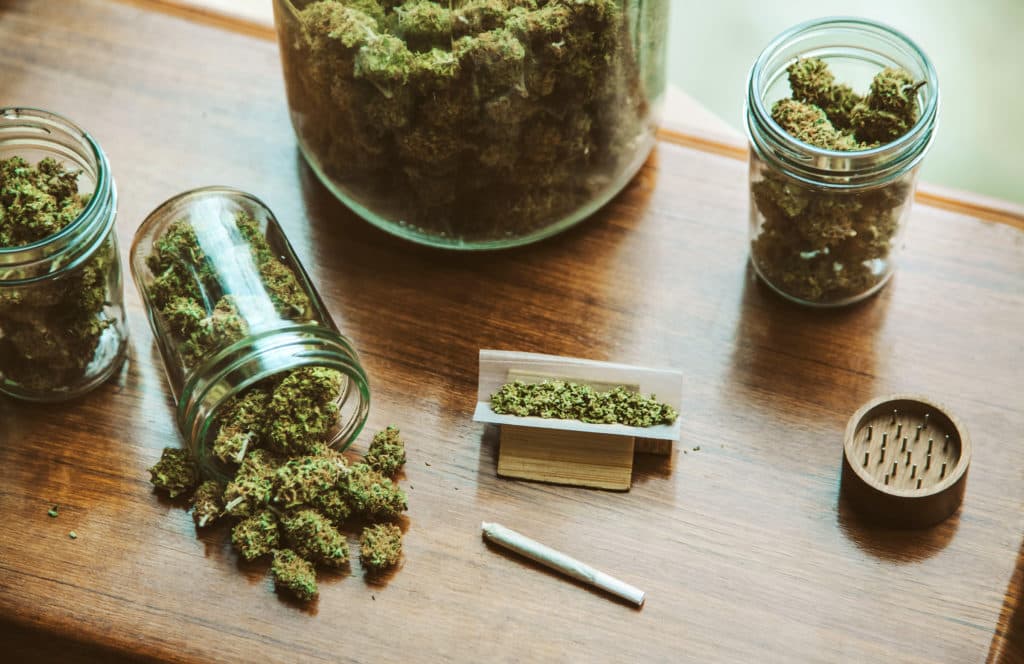
Adults 21 and older may legally possess up to one ounce of cannabis leaf, 12 grams of concentrated cannabis, or cannabis products containing 750 milligrams or less of Delta-9 THC. Delaware levies a 15% tax on recreational cannabis sales. Public consumption of cannabis remains illegal. Home cultivation also remains prohibited under current Delaware law — a restriction that advocacy groups continue to challenge. For more on how cannabis law varies across the country, see our
.Delaware Cannabis Legalization: What It Means
Delaware cannabis legalization followed a longer, harder road than many states. Carney’s 2022 veto set the effort back by a full year. The regulatory build took another two years after HB 1 and HB 2 became law. Nevertheless, the First State ultimately delivered a legal market built around equity, safety, and accountability — with strong early sales figures to match. Projections suggest the Delaware cannabis market will generate more than $43 million in annual tax revenue and create at least 1,400 jobs over its first five years. For ongoing coverage of the Delaware cannabis market and legalization developments across the US, visit our
.