


Can you get a contact high? It is one of the most common questions among both cannabis users and non-users alike. Not unlike secondhand cigarette smoke, secondhand cannabis smoke raises reasonable concerns — whether you are someone who enjoys cannabis and worries about others nearby, or a non-smoker wondering about exposure at a party or event. This article breaks down what a contact high actually is, what the research says, and the specific conditions required for one to occur. For a broader introduction to how cannabis works, see our
.In today’s article, we’ll break down what contact highs are, the effects they have and research surrounding the topic. Let’s delve in.
What is a Contact High?
A contact high refers to the idea that a sober person can experience drug effects simply by being near someone using them. In the cannabis context, this means breathing in secondhand smoke and involuntarily absorbing THC. The concept is similar to concerns about secondhand tobacco smoke — and it raises equally legitimate questions.
The short answer: can you get a contact high? Yes, but only under very specific circumstances. Simply being near a cannabis smoker outdoors or in a ventilated space will not give you a contact high. The conditions required are more extreme than most everyday scenarios. We will cover exactly what those conditions are throughout this article.
Can You Get a Contact High? What the Research Says
The Key Studies
Whether a contact high is a genuine phenomenon divides researchers. Two key studies shed the most light on the question.
A study by the CDC’s Health Hazard Evaluation Program found that small amounts of THC did appear in 34% of participants after exposure to secondhand smoke. However, the levels were not high enough to cause them to fail a drug test. This suggests that some THC absorption occurs — but not necessarily enough to cause psychoactive effects.
A different study by Edward J. Cone et al. at Johns Hopkins University produced more striking results. Researchers placed six smokers and six non-smokers in a poorly ventilated room. The non-smokers subsequently tested positive for THC after breathing in secondhand cannabis smoke. Importantly, however, those positive test results decreased rapidly over time.
Furthermore, the conditions — an enclosed, airless space with sustained exposure — were deliberately extreme.
Together, these studies suggest that you can get a contact high, but the probability depends on two key variables: proximity and ventilation.
What Conditions Make a Contact High More Likely?
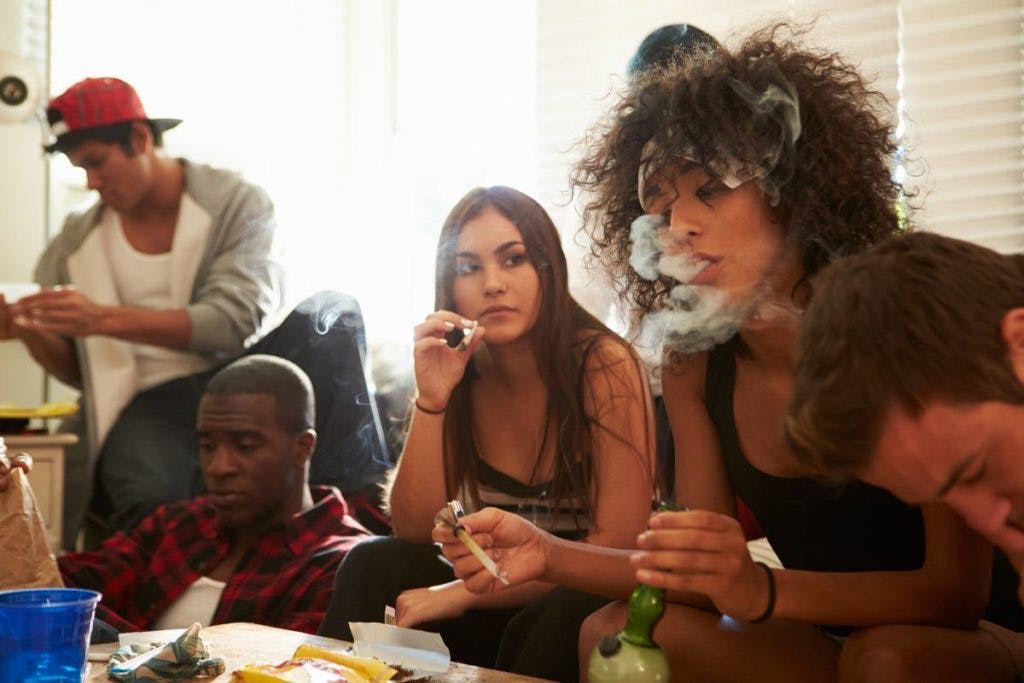
For a contact high to occur, research consistently points to the same requirements. First, the non-smoker must be in close physical proximity to the cannabis smoker — not just passing by. Second, the space must have poor ventilation. A sealed car with the windows up, a small bedroom with no airflow, or a hotboxed room all increase the risk considerably.
By contrast, if someone smells cannabis while walking down a street or through a ventilated room, the THC concentration in the air is far too low to produce any psychoactive effect. Therefore, under typical real-world conditions, can you get a contact high? It is genuinely unlikely.
Can You Get a Contact High? Smoking vs. Vaping

Vaping cannabis produces notably less airborne THC than smoking. A vaporizer does not burn freely — consequently, it releases no cannabinoids when the user is not actively inhaling. The only way THC enters the air is when the user exhales vapor that their lungs have not fully absorbed.
That said, vaping does not eliminate the possibility entirely. A bystander would need to be extremely close — essentially close enough to be hitting the vape themselves — to absorb a meaningful amount. Therefore, can you get a contact high from vaping? Technically yes, but the threshold is considerably higher than with combusted smoke.
If you want to eliminate any contact high risk altogether, edibles are the answer. The only way someone gets high from an edible is by directly ingesting it. No secondhand exposure is possible. See our
for current options across every product format.How Long Do Cannabinoids Stay Active in Secondhand Smoke?
According to a review article published in the British Journal of Anaesthetics, only around 50% of THC and other cannabinoids reach the user through mainstream smoke inhalation. Moreover, if the smoker inhales deeply and holds for a few seconds before exhaling, almost all remaining cannabinoids enter their bloodstream — leaving very little to exhale. Consequently, the THC concentration in exhaled smoke is often lower than people assume.
The Edward J. Cone et al. study found that one hour of sustained exposure in a poorly ventilated room did produce detectable THC levels in non-smokers. However, those levels dropped rapidly thereafter. Under typical circumstances, therefore, airborne cannabinoids dissipate long before reaching meaningful concentrations for a non-smoker.
Can Pets Get a Contact High?
Dogs
Can you get a contact high if you are a dog? The answer is — much more easily than a human. Dogs have significantly more cannabinoid receptors than humans, making them considerably more sensitive to THC. A dog in a hotboxed room or one that consumes a cannabis product can experience distressing effects, including dilated pupils, instability, drooling, vomiting, low blood pressure, and easy startle responses.
Crucially, keep all cannabis products secured and away from pets at all times. If you suspect your dog has consumed cannabis or absorbed significant secondhand smoke, contact your veterinarian immediately. While death from cannabis consumption alone is uncommon, physical weakness, restricted breathing, and fainting carry serious secondary risks.
Cats
Cats present a similar concern. Unlike catnip — which derives from an entirely different plant — cannabis affects cats through the same cannabinoid system it activates in humans and dogs. Unfortunately, even less research exists on cannabis effects in cats than in dogs. Therefore, the safest approach is to keep cannabis away from them entirely.
Signs that your cat may have been affected include dilated pupils, lack of coordination, vomiting, low blood pressure or heart rate, and seizures. As with dogs, contact a veterinarian as soon as possible if you notice these symptoms.
Side Effects of Secondhand Cannabis Smoke
Even when a full contact high does not occur, secondhand cannabis smoke can still produce side effects in non-smokers nearby. These include headaches, irritated or red eyes, dry mouth, coughing, dizziness, nausea, tiredness, and anxiety. Therefore, even under conditions where a contact high is unlikely, basic courtesy toward others still matters.
The respiratory risks of secondhand cannabis smoke also deserve acknowledgment. According to the
, inhaling marijuana smoke may cause lung irritation, wheezing, acute bronchitis, and chronic coughs. People with existing respiratory conditions such as asthma are particularly vulnerable and deserve extra consideration.
Additionally, a study by Xiaoyin Wang et al. published in the Journal of the American Medical Association found that rats exposed to secondhand cannabis smoke for one minute experienced dilated blood vessels and low blood pressure for at least 90 seconds. The researchers concluded that secondhand cannabis smoke produces adverse cardiovascular effects regardless of its source — in line with what we know about tobacco smoke.
Can a Contact High Show Up on a Drug Test?
Under most real-world conditions, no. The Health Hazard Evaluation Program study found that secondhand THC exposure did not produce levels high enough to cause participants to fail a drug test. The Edward J. Cone et al. study did find positive test results in extreme conditions — but only after prolonged exposure in a sealed, poorly ventilated room, and only for a short time afterward.
Therefore, someone who has walked through a cannabis-friendly space, attended an outdoor festival, or spent a brief amount of time near a smoker in a ventilated area is extremely unlikely to register THC on a drug test. The conditions required for a detectable positive result are both unusual and time-limited.
Frequently Asked Questions
Can you get a contact high from just smelling weed?
No. Smelling cannabis — passing by someone smoking outdoors, for example — does not deliver enough THC to produce psychoactive effects. To get a contact high, you need sustained proximity to active smoke in a poorly ventilated enclosed space. Brief exposure in open or ventilated environments does not meet that threshold.
How long does vape smoke stay in the air?
Research on standard cigarette particles suggests they can linger for two to three hours. Vape particles, however, behave very differently. A collaborative study published in
found that exhaled e-cigarette vapor disperses within seconds — even in poorly ventilated spaces. Consequently, vaping poses substantially less secondhand exposure risk than combusted cannabis or tobacco smoke.Is secondhand CBD smoke safe?
CBD does not contain meaningful levels of THC, which means it does not cause psychoactive effects in bystanders. However, the smoke or vapor itself can still irritate the lungs and airways of those nearby — particularly people with asthma, bronchitis, or other respiratory conditions. For more on the difference between CBD and THC, see our guide on
. Additionally, be mindful of the specific ingredients in any vape products being used, as some cartridges contain additional compounds beyond CBD.What are the main factors that determine whether a contact high is possible?
Two factors matter most: proximity and ventilation. The closer a non-smoker is to an active cannabis smoker, and the more sealed and airless the space, the greater the chance of absorbing enough THC to feel any effect. Open spaces, outdoor settings, and well-ventilated rooms dramatically reduce any contact high risk.
Wrapping Up
So — can you get a contact high? Yes, but the conditions required are specific and uncommon in everyday life. The research consistently shows that prolonged exposure in a poorly ventilated enclosed space is necessary for any meaningful THC absorption in non-smokers. Brief encounters with cannabis smoke in normal settings are not sufficient.That said, being a considerate cannabis consumer matters — not just to avoid contact highs, but because secondhand smoke carries health implications for those around you, particularly for children, pets, and people with respiratory conditions. Responsible enjoyment means thinking about who else is in the room. For more on responsible cannabis consumption and dosing, visit our
.